Choosing compatible plants and fish
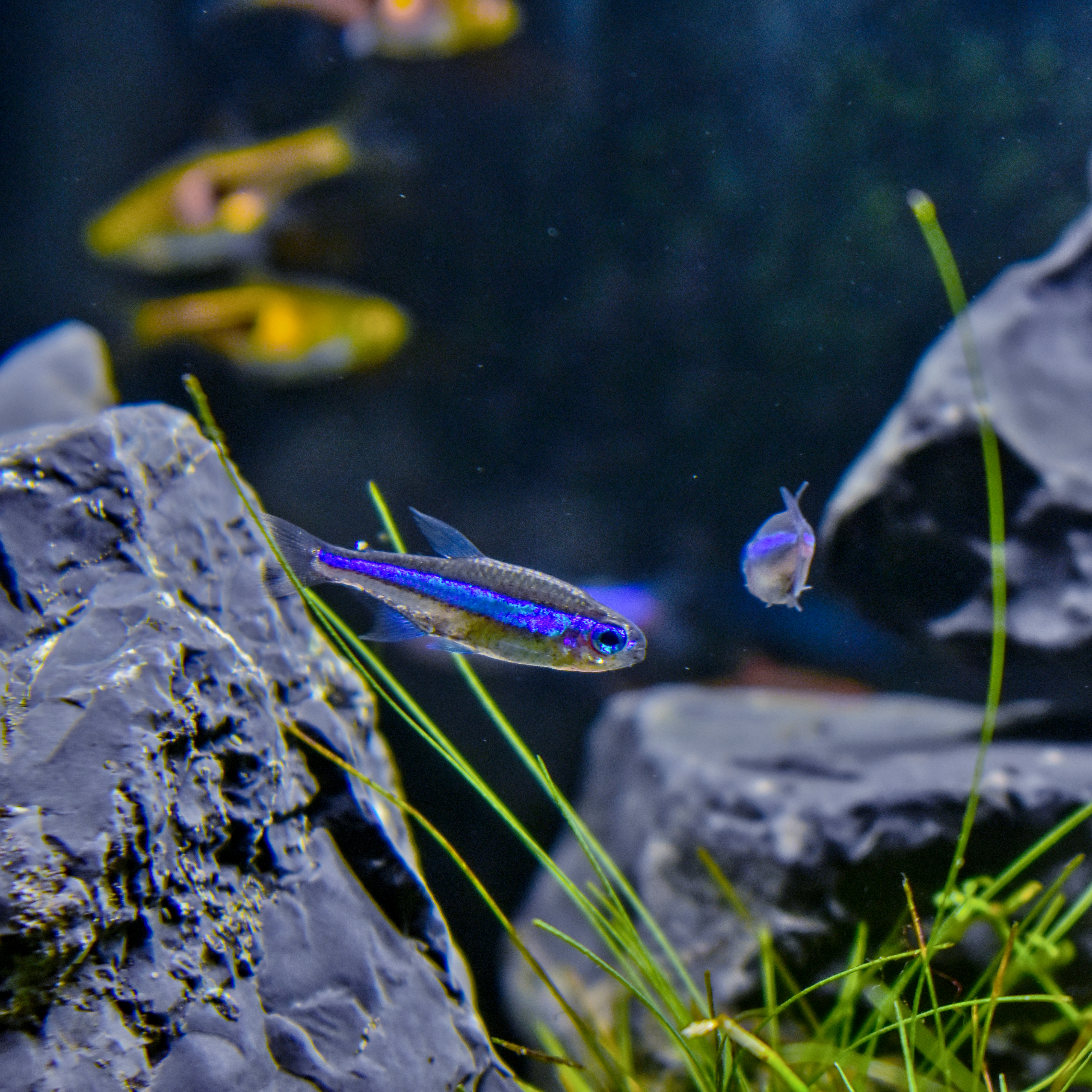
A green neon tetra, a small schooling species. Source: Wikimedia Commons.
Compatibility is less about picking favourites and more about honesty: the species that thrive are the ones that match the water you actually have, the tank size you can maintain, and each other's temperament. Forcing an incompatible mix is the most common reason a tank looks healthy for a month and then declines.
Start with the plants
Plants are not decoration alone. They take up nitrate, compete with algae for nutrients, and give shy fish places to shelter. Beginner-friendly aquatic plants tend to be undemanding about light and tolerant of a range of water conditions.
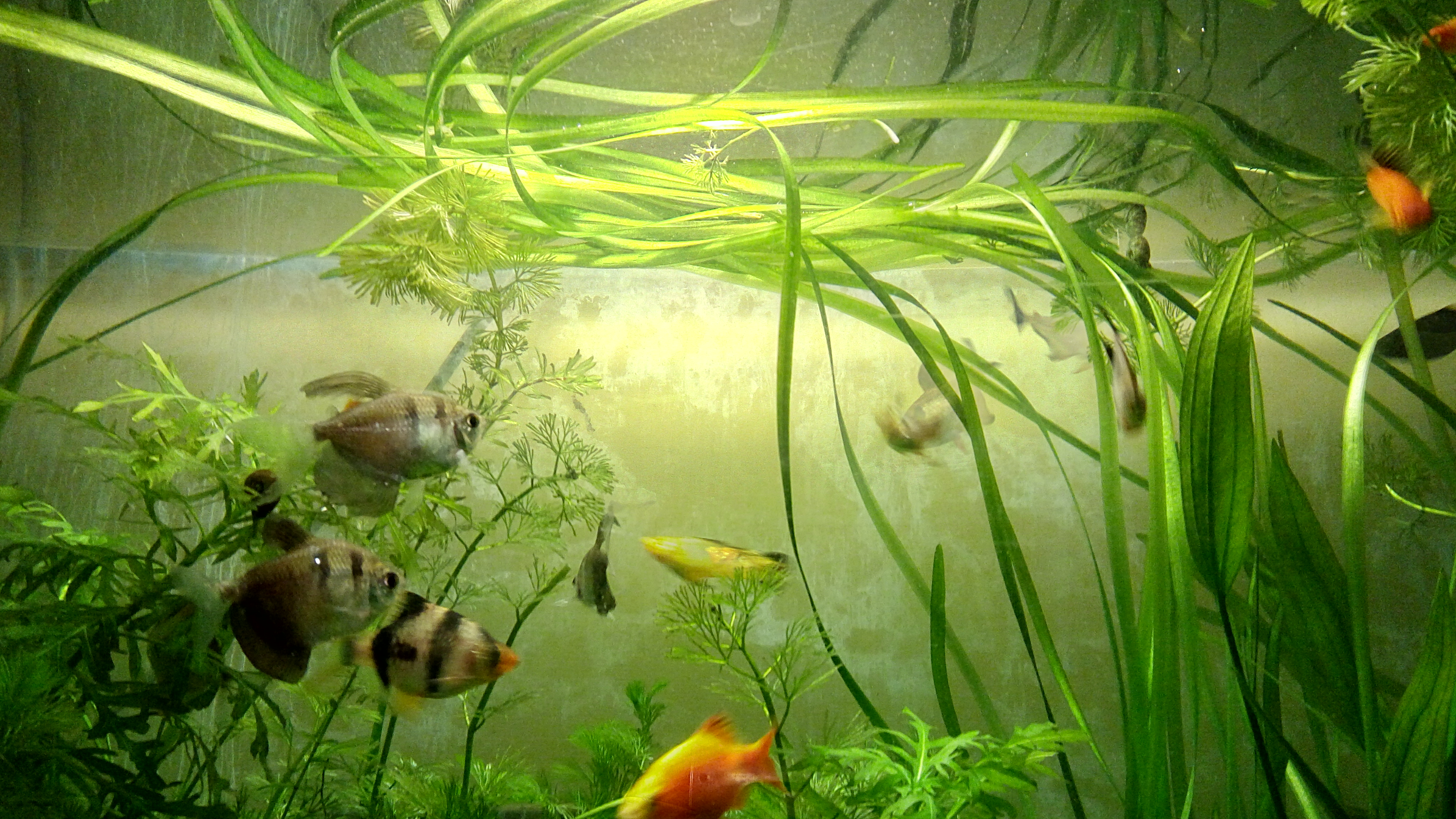
An aquarium planted with Vallisneria. Source: Wikimedia Commons.
- Rooted background plants such as Vallisneria provide vertical structure and grow without demanding equipment.
- Attach-on plants like Java fern and Anubias grow on wood or rock and tolerate lower light.
- Floating plants shade the tank and absorb nutrients quickly, which can help limit algae.
Then choose fish that match
Three questions settle most stocking decisions before livestock enters a tank:
| Question | Why it matters |
|---|---|
| How large does it grow? | Adult size, not store size, decides whether the tank is big enough. |
| Is it a schooling species? | Schooling fish such as small tetras are stressed when kept in too-small groups. |
| What is its temperament? | Mixing peaceful and aggressive species leads to nipped fins and chronic stress. |
Invertebrates such as cherry shrimp can coexist with small peaceful fish, but larger or aggressive fish may treat them as food. Match the whole community, not just the fish.

Cherry shrimp in a planted tank. Source: Wikimedia Commons.
Responsible stocking in Canada
Aquarium fish and plants should never be released into local waterways. Several aquarium species have established themselves as invasive populations after being released, and Canadian authorities specifically discourage the practice.
If you can no longer keep a fish or plant, return it to a store, give it to another keeper, or contact a local aquarium society. The Government of Canada provides guidance on aquatic invasive species and why release is harmful.